Last updated: 8 September 2026 · Reviewed by the Feel Supreme Nutrition Team · 14 min read
Quick answer
The best brain supplements for adults are the ones with real human trial data behind them: Lion's Mane mushroom, omega-3 fatty acids, vitamin B12, NMN, and adaptogens like ashwagandha. Lion's Mane supports nerve growth factor and long-term cognitive function, omega-3 and B12 protect the underlying neural machinery, NMN fuels cellular energy production, and ashwagandha targets the stress-cortisol loop that causes most day-to-day brain fog. The single-best pick for most healthy adults is a dual-extracted Lion's Mane taken daily for 8 to 12 weeks.
Want the ready-made routine? Skip to the Feel Supreme brain stack.
Why "brain fog" isn't really one problem
Search "best brain supplements" and you'll get a wall of top-10 lists that treat every cognitive concern the same. That's why so many people buy something, feel nothing after two weeks, and give up. Brain performance isn't one system — it's several, and different supplements work on different ones.
Before you buy anything, work out which of these you're actually dealing with:
- Age-related cognitive decline — slower recall, harder to hold new information, the "tip of my tongue" feeling more often. Best supported by: Lion's Mane, omega-3, NMN, phosphatidylserine.
- Stress-driven brain fog — plenty of sleep on paper but you still can't concentrate, mentally exhausted by 3 pm, snappy under pressure. This is a cortisol problem, not a memory problem. Best supported by: ashwagandha, Reishi mushroom, L-theanine, Rhodiola.
- Focus and attention gaps — mind wandering, difficulty finishing deep work, task-switching costs. Best supported by: Lion's Mane, Cordyceps, L-tyrosine, caffeine + L-theanine.
- Nutrient-deficiency fog — often the cause when people over 40 (or vegans of any age) complain of tiredness plus mental sluggishness. B12 and vitamin D are the two most common gaps in the UK. Best supported by: vitamin B12 (methylcobalamin), vitamin D3, omega-3 (from algae if vegan).
Most adults have a mix. That's why stacks tend to work better than any single ingredient — but a good stack is targeted, not a kitchen sink.
The best brain supplements for adults (2026)
1. Lion's Mane Mushroom — the most-researched natural nootropic

Lion's Mane (Hericium erinaceus) is the mushroom nearly every serious cognitive-supplement article puts at the top of the list, and for good reason: it has the most published human trial data of any natural cognitive supplement in the last decade. Its two active compound families — hericenones (in the fruiting body) and erinacines (in the mycelium) — are thought to stimulate the brain's production of nerve growth factor (NGF), a protein essential for neurogenesis and neuroplasticity.
A landmark 2009 Japanese trial (Mori et al.) found that adults with mild cognitive impairment who took 3 grams of Lion's Mane powder daily for 16 weeks showed statistically significant improvements on cognitive function scales — with the effect disappearing four weeks after they stopped, confirming the mushroom was doing the work.
Quality matters more here than for almost any other supplement. Look for dual-extracted, fruiting-body extract. A lot of cheap Lion's Mane on the market is mostly mycelium grown on grain — meaning the label says "1,000 mg" but a large fraction is starch. Here's why dual extraction matters.
Typical dose: 500–3,000 mg fruiting-body extract daily, or 1–2 ml of a 10:1 dual-extracted tincture.
Timeline: Some notice sharper focus within 2 weeks; the memory and NGF-related benefits build over 8–12 weeks.
Feel Supreme pick: Our Lion's Mane Mushroom Extract (60 ml liquid tincture) is dual-extracted from full fruiting bodies — the format that consistently outperforms mycelium powders in the research. It's award-winning, made in the UK, and one of the most-loved products in our range. Read how long Lion's Mane takes to work.
2. Omega-3 fatty acids — the structural nutrient your brain is literally made of
Roughly 60% of the brain's dry weight is fat, and a substantial part of that is DHA — one of the two long-chain omega-3 fatty acids found in oily fish. Low DHA has been linked to accelerated cognitive ageing, lower grey-matter volume, and worse memory performance in older adults.
A 2022 review in Nutrients concluded that omega-3 supplementation modestly but consistently improved memory and executive function in adults with mild cognitive complaints. It's not a fast-acting nootropic — you won't feel sharper tomorrow — but it's one of the highest-value long-term investments in cognitive health you can make.
Typical dose: 1,000–2,000 mg combined EPA + DHA daily.
Timeline: 8–12 weeks for measurable cognitive change; brain-tissue omega-3 levels take months to shift.
Vegan alternative: Algae-derived DHA/EPA delivers the same active fats without fish oil.
3. Vitamin B12 (methylcobalamin) — the fix for the most common brain-fog cause in the UK
B12 deficiency is one of the most under-diagnosed causes of brain fog, memory complaints, and fatigue in the UK, particularly in adults over 50, vegetarians, vegans, and people on long-term metformin or acid-reducing medication. The NHS lists memory problems and difficulty thinking clearly among the neurological symptoms of low B12.
Here's the important nuance most articles miss: B12 supplements come in different forms. Methylcobalamin is the bioactive form your nervous system uses directly. Cyanocobalamin is a cheaper synthetic form your body has to convert — fine for most people, but sub-optimal for anyone with the common MTHFR gene variant that impairs methylation.
Typical dose: 1,000 mcg methylcobalamin daily (well above the RDA — B12 is water-soluble and has no established upper limit).
Timeline: If you're deficient, energy and mental clarity often shift within 2–4 weeks.
Feel Supreme pick: Our Vitamin B12 Methylcobalamin 1000mcg uses the bioactive form and delivers a therapeutic dose in one small daily tablet. Essential if you're vegan or over 50; useful for most UK adults.
4. NMN — the cellular-energy layer under everything
NMN (nicotinamide mononucleotide) doesn't work like a classic nootropic. It doesn't make you feel sharper in an hour. What it does is raise levels of NAD+ — a molecule that powers energy production in every cell in your body, including neurons — and NAD+ falls sharply with age.
Trials on human NMN supplementation are still relatively new but consistently positive: improvements in reported energy, cognitive clarity, sleep quality and physical performance across doses of 250–900 mg daily. It's become one of the most-discussed supplements in the longevity space precisely because it works at the root of the ageing process rather than treating one symptom.
Typical dose: 250–500 mg daily to start, taken in the morning.
Timeline: 8–12 weeks. Effects are gradual and cumulative rather than acute.
Feel Supreme pick: Our NMN Capsules with Astaxanthin (99% pure) pairs high-purity NMN with astaxanthin — a powerful antioxidant that crosses the blood-brain barrier and protects the mitochondria NMN is charging up. Read the full guide to what NMN is and how it works.
5. Ashwagandha (KSM-66) — for stress-driven brain fog
If your problem is that you can't concentrate under pressure, ashwagandha is more likely to help than any nootropic. It's classified as an adaptogen — a plant that helps the body regulate its stress response. Its effect on cognitive function is mostly indirect: it lowers cortisol, and lower cortisol means better working memory, better attention, and less afternoon mental crash.
A 2019 randomised trial in Medicine found that 300 mg of KSM-66 ashwagandha twice daily reduced serum cortisol by 27% over 8 weeks alongside significant reductions in perceived stress. Our full guide on ashwagandha for stress and anxiety goes deeper on the mechanism.
Typical dose: 300–600 mg KSM-66 root extract daily, with food.
Timeline: 2–4 weeks for stress effect; cognitive knock-on effects follow.
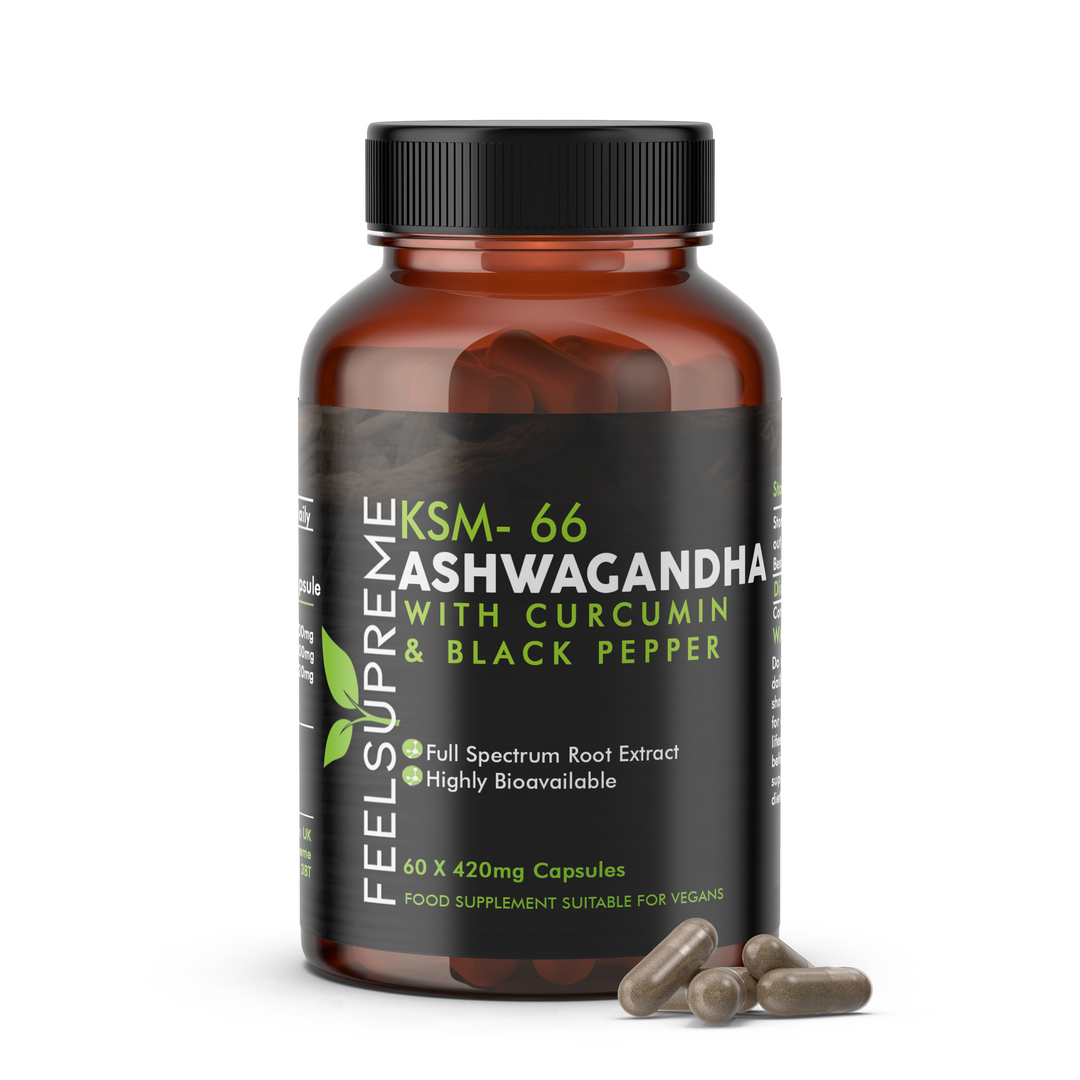
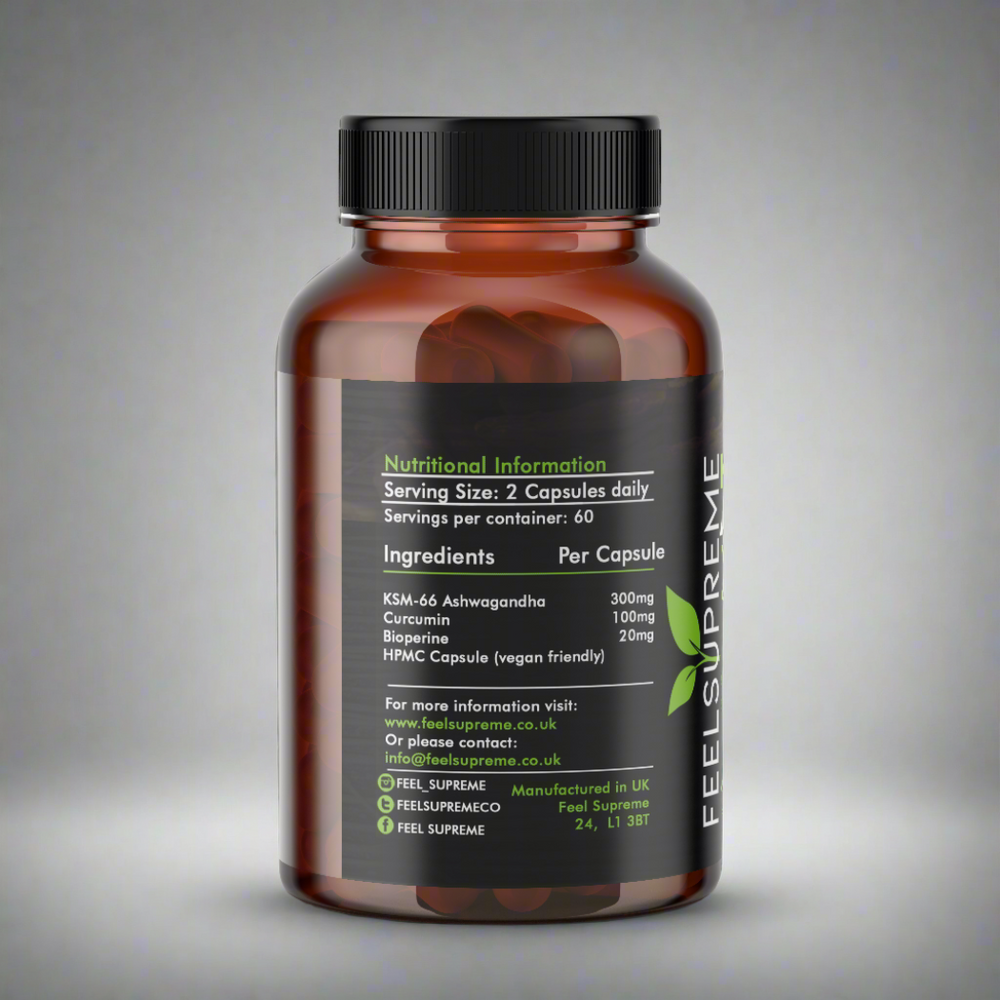
Feel Supreme pick: Our KSM66 Ashwagandha with Curcumin uses the patented KSM-66 extract (the version with the strongest trial data) and pairs it with curcumin for a wider anti-inflammatory effect. Two capsules daily.
6. Cordyceps — for mental energy without the caffeine crash
Cordyceps is best known as an athletic-performance mushroom for its effect on oxygen utilisation and ATP production, but the same mechanism supports focused mental work. More cellular energy to the brain means less afternoon fog and better sustained attention — without the jitter of caffeine or the crash that follows it.
Studies on cordyceps for cognitive performance in healthy adults are still emerging, but the endurance and fatigue data is strong enough that many people use it as their morning "focus fuel" during long work sessions.
Typical dose: 1,000–3,000 mg extract daily.
Timeline: Some feel it within days; steady effect over 2–4 weeks.
7. Reishi and the wider mushroom stack — for the mind-body pieces around focus
Reishi is the calm counterweight to Cordyceps and Lion's Mane. It won't sharpen your focus directly, but by lowering stress, supporting sleep quality, and moderating immune inflammation, it removes some of the biggest silent drags on cognitive performance. A mushroom blend that includes Lion's Mane, Cordyceps, Reishi and Chaga covers energy, focus, calm and antioxidant load in one capsule.
Feel Supreme pick: Our Mushroom Blend combines Shiitake, Chaga, Maitake, Reishi and Lion's Mane in one capsule — useful when you want the wider mushroom benefit without buying five separate tinctures. Browse the full Mushroom Collection for single-species options.
8. Bacopa monnieri — the classic memory herb
Bacopa is one of the most-studied herbal nootropics for memory formation and information recall, particularly in older adults. A 2014 meta-analysis in the Journal of Ethnopharmacology found significant improvements in memory recall speed after 12 weeks of daily use.
Feel Supreme doesn't currently formulate Bacopa — we've focused our range on ingredients with wider daily benefit rather than single-use memory herbs. If you specifically want to try Bacopa for memory support, look for a standardised extract at 300 mg per day containing at least 50% bacosides.
9. Ginkgo biloba — for cerebral blood flow
Ginkgo works differently to most nootropics on this list: it improves blood flow to the brain rather than acting on neurotransmitters or nerve growth. Evidence is mixed — some meta-analyses show meaningful benefit for older adults with cognitive complaints, others show minimal effect in healthy adults. It's another honest gap in the Feel Supreme range; if you want to try it, choose a standardised EGb 761 extract at 120–240 mg daily.
10. Shilajit — the trace-mineral cofactor
Shilajit isn't a classic nootropic, but the mineral matrix — around 80 trace minerals plus fulvic acid — supports the enzymatic reactions that keep neural machinery working. It's a foundational supplement, not an acute one, and pairs particularly well with NMN (both work at the mitochondrial level).
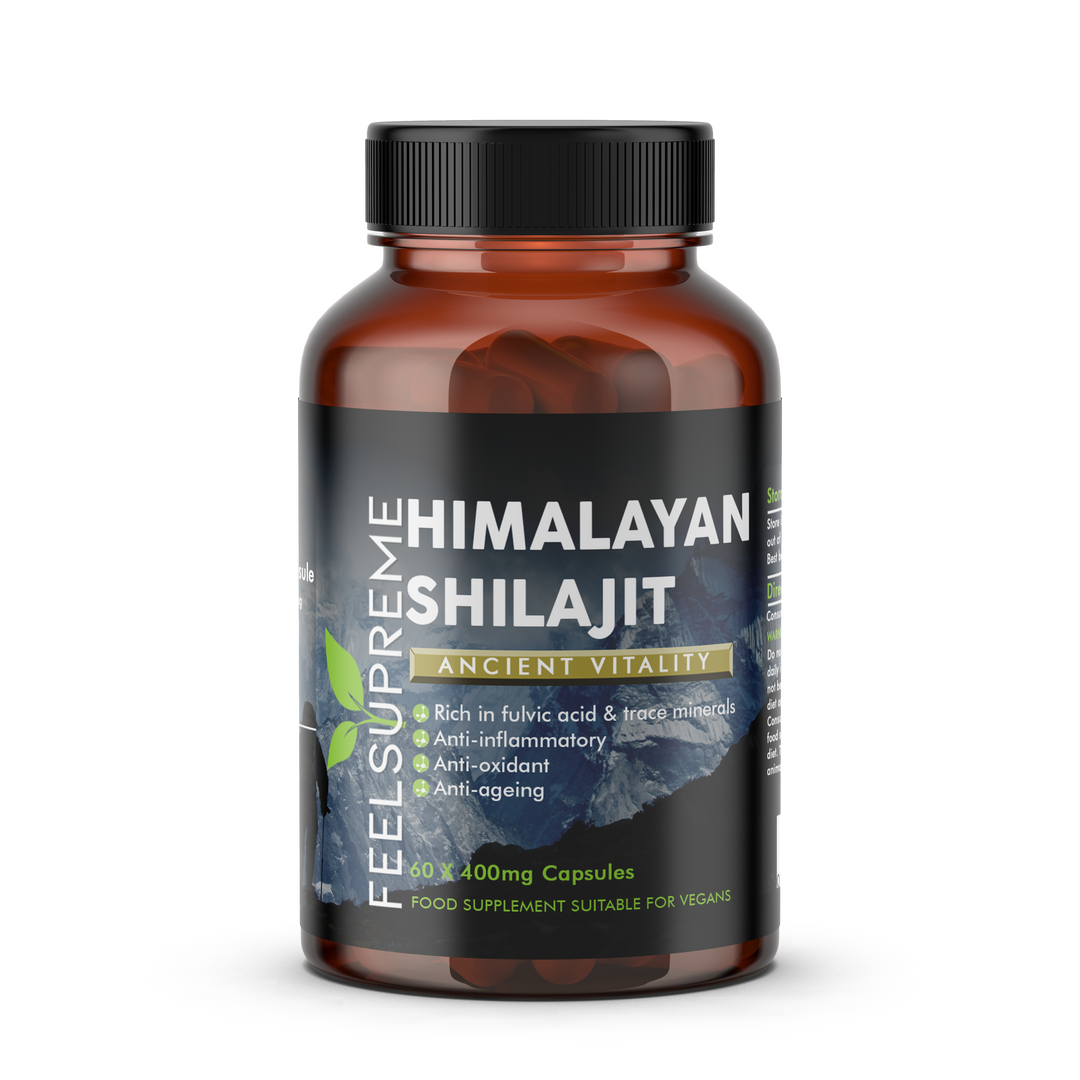
Feel Supreme pick: Our Altai Shilajit Resin is 100% pure and independently tested for heavy metals — the single most important verification with shilajit. See the full shilajit benefits guide.
How the top 10 brain supplements compare
| Supplement | Best for | Evidence | Time to work |
|---|---|---|---|
| Lion's Mane | Memory, focus, neuroplasticity | Strong | 2–12 weeks |
| Omega-3 (EPA/DHA) | Long-term brain structure | Strong | 8–12 weeks |
| Vitamin B12 | Fatigue, deficiency fog | Strong (if deficient) | 2–4 weeks |
| NMN | Cellular energy, ageing brain | Growing | 8–12 weeks |
| Ashwagandha (KSM-66) | Stress-driven brain fog | Strong | 2–4 weeks |
| Cordyceps | Mental energy, sustained focus | Moderate | Days–4 weeks |
| Reishi | Calm, sleep, stress moderation | Moderate | 4–8 weeks |
| Bacopa monnieri | Memory recall (older adults) | Moderate | 8–12 weeks |
| Ginkgo biloba | Cerebral blood flow | Mixed | 4–8 weeks |
| Shilajit | Mineral cofactors, mitochondria | Emerging | 2–4 weeks |
The quality piece that changes everything (and most guides skip)
Two adults can buy a "Lion's Mane" supplement from two different brands and get completely different results. It's not luck — it's what's actually inside the capsule.
The three quality markers that matter most for mushroom-based brain supplements:
- Fruiting body vs mycelium — The fruiting body is the visible mushroom. It contains the highest concentration of beta-glucans and, in Lion's Mane, the hericenones that support brain function. A lot of cheaper Lion's Mane products use mycelium on grain — meaning most of what you're paying for is starch. If the label doesn't specify fruiting body, assume it's not.
- Dual extraction — Mushroom cell walls are made of chitin, which your body can't easily break down. Extraction pulls out the active compounds. Hot water extracts the water-soluble ones (beta-glucans); alcohol extracts the fat-soluble ones (triterpenes). A dual-extracted product gives you both. Powder alone gives you a fraction of the benefit.
- Standardised extract percentage — Look for a percentage like "30% polysaccharides" or "10:1 extract". This tells you the concentration relative to raw mushroom. No percentage = no way to compare potency between brands.
The same principle applies across cognitive supplements more broadly. For B12, choose methylcobalamin not cyanocobalamin. For ashwagandha, choose KSM-66 or Sensoril rather than generic root powder. For NMN, look for ≥98% purity confirmed by third-party testing.
How to stack brain supplements for real synergy
Single supplements are usually less effective than well-designed stacks because cognitive function has multiple bottlenecks — you can't just add more of one thing. Three combinations with the strongest evidence:
- Lion's Mane + Omega-3 — Lion's Mane supports NGF and neural growth; omega-3 provides the DHA those new neurons are built from. It's the closest thing to a "structural + functional" pairing for long-term brain health.
- Ashwagandha + L-theanine (or Reishi) — Ashwagandha lowers baseline cortisol; L-theanine or Reishi modulates the acute stress response. Together they clear both the chronic and the momentary drivers of stress-related brain fog.
- NMN + Shilajit — Both work at the mitochondrial level. NMN raises NAD+ (the fuel); shilajit provides trace mineral cofactors (the enzymes need them to function). Popular pairing among people focused on cognitive longevity.
Timing matters too. Take Lion's Mane, Cordyceps, NMN and B12 in the morning — they're stimulating in a subtle way. Take ashwagandha and Reishi with dinner — they support the calm side of the day and don't interfere with sleep.
What supplements can't do for your brain
Being straight with you: no supplement will out-work a broken foundation. If you sleep four hours a night, live on ultra-processed food, and don't move your body, the return on any brain supplement will be modest at best.
The four things that matter more than any supplement:
- Sleep — 7 to 9 hours, dark room, consistent times. Deep sleep is when the brain clears metabolic waste through the glymphatic system.
- Exercise — Aerobic exercise raises BDNF (brain-derived neurotrophic factor), the same growth pathway Lion's Mane supports. 150 minutes of moderate activity per week is the NHS baseline.
- Sunlight and vitamin D — Poor vitamin D status is associated with worse cognitive performance and higher dementia risk. The NHS recommends UK adults consider a daily 10 mcg vitamin D supplement from October to March.
- Whole-food nutrition — Fatty fish, leafy greens, berries, nuts, olive oil. The Mediterranean and MIND dietary patterns show real cognitive-protective effects in longitudinal studies.
Supplements are the multiplier, not the base. Fix the base first.
When to see a GP instead
Some cognitive changes need clinical evaluation, not a stack recommendation. See a GP if you experience:
- Getting lost in familiar places, or forgetting recent conversations you'd normally remember
- Sudden onset of confusion, personality change, or word-finding difficulty
- Cognitive symptoms alongside numbness, tingling, or balance problems (possible B12 deficiency or neurological cause)
- Persistent brain fog after a viral illness (long-COVID and post-viral fatigue often need targeted management)
- A family history of early-onset dementia and any noticeable change in your own cognition
The Feel Supreme brain stack

Here's a starter routine built from products in the Feel Supreme brain and cognitive range, layered by how quickly each part contributes.
The daily foundation (daily, long-term)
- Lion's Mane Mushroom Extract — 1–2 ml under the tongue each morning
- Vitamin B12 Methylcobalamin — one tablet with breakfast
The stress-calm layer (daily, evenings)
- KSM66 Ashwagandha with Curcumin — two capsules with dinner
The longevity + mitochondrial layer (add after 4–6 weeks on the base)
- NMN Capsules with Astaxanthin — one capsule in the morning
- Altai Shilajit Resin — pea-sized amount in warm water, most mornings
Give the base 8–12 weeks before you assess results properly. Add layers gradually so you know what's doing what.
Ready to build your brain stack?
Explore the full Brain & Cognitive Health range — 100% natural, vegan-friendly, made in the UK.
Shop Brain & Cognitive Health →FAQ
What is the best brain supplement for adults?
For most healthy adults, dual-extracted Lion's Mane mushroom is the single-best starting point. It has the strongest human trial data of any natural cognitive supplement, supports nerve growth factor and neuroplasticity, and works for both focus and long-term memory. Take it daily for 8 to 12 weeks before assessing the effect.
What are the top 10 brain supplements?
The 10 brain supplements with the best evidence base are Lion's Mane mushroom, omega-3 fatty acids (EPA/DHA), vitamin B12 (methylcobalamin), NMN, ashwagandha (KSM-66), Cordyceps mushroom, Reishi mushroom, Bacopa monnieri, Ginkgo biloba, and shilajit. Which one is best for you depends on whether your main issue is memory, focus, stress-related fog, or nutrient deficiency.
What are the best brain supplements for memory and focus?
For memory, Lion's Mane and Bacopa monnieri have the strongest evidence. For focus, Lion's Mane, Cordyceps, and adaptogens like ashwagandha and Rhodiola work better than classic memory herbs. B12 and omega-3 support both. Most people benefit from a small stack rather than a single supplement.
What are the best brain supplements in the UK?
The best brain supplements available in the UK are Lion's Mane, NMN, methylcobalamin B12, KSM-66 ashwagandha, and functional mushroom blends. Look for UK-made supplements that specify fruiting-body extract (for mushrooms), the bioactive form of B12 (methylcobalamin), and third-party purity testing (especially for NMN and shilajit). Feel Supreme manufactures its full range in the UK from Prescot near Liverpool.
How long do brain supplements take to work?
It depends on the supplement and what you're trying to change. Cordyceps and adaptogens like ashwagandha can show noticeable effects within days to two weeks. Lion's Mane, omega-3, NMN, and Bacopa are longer-game — you need 8 to 12 weeks of consistent daily use before you can honestly say whether they work for you. Missing days or stopping early is the number one reason people conclude a supplement "didn't work".
Are brain supplements safe to take every day?
The supplements in this guide are generally safe for daily use at recommended doses. Lion's Mane, omega-3, B12 and shilajit have long safety records. Ashwagandha is safe for most people but not recommended if you have thyroid conditions or take immunosuppressants. NMN is well tolerated in trials but is a newer supplement — long-term safety data is still being collected. Speak to a pharmacist or GP if you take prescription medication, are pregnant or breastfeeding, or are managing a diagnosed health condition.
Can brain supplements prevent dementia?
No supplement is proven to prevent dementia, and be sceptical of anything marketed that way. What some supplements can realistically do is support underlying brain health — reduce inflammation, support cellular energy, maintain nutrient status — which is part of the wider picture that protects cognition over time. Sleep, exercise, blood pressure control, and Mediterranean-style eating have stronger evidence for dementia risk reduction than any supplement.
Do I need a nootropic stack like Mind Lab Pro?
Premium multi-ingredient nootropic stacks combine 8–12 ingredients in one capsule at moderate doses each. That's convenient but expensive, and you can't adjust the dose of any single ingredient. Building your own stack from individual products lets you tune doses to your response, swap ingredients out, and often costs less month-on-month. For most people, a foundation of Lion's Mane, B12, omega-3 and an adaptogen delivers most of the benefit of an all-in-one nootropic at a fraction of the price.
Sources and further reading
- NHS — Vitamin B12 or folate deficiency anaemia
- NHS — Vitamin D recommendations for the UK
- Mori K, et al. (2009) — Improving effects of the mushroom Yamabushitake (Hericium erinaceus) on mild cognitive impairment. Phytotherapy Research.
- Chandrasekhar K, et al. (2019) — A prospective, randomized, double-blind study of the safety and efficacy of a high-concentration ashwagandha root extract. Medicine.
- Dighriri IM, et al. (2022) — Effects of omega-3 fatty acids on brain functions: a systematic review. Cureus.
- Kongkeaw C, et al. (2014) — Meta-analysis of randomized controlled trials on cognitive effects of Bacopa monnieri. Journal of Ethnopharmacology.
- Yoshino J, et al. (2021) — NMN increases muscle insulin sensitivity in prediabetic women. Science.
- Alzheimer's Society UK — Modifiable risk factors for dementia.
This article is for educational purposes only and is not a substitute for medical advice. Food supplements are not intended to diagnose, treat, cure, or prevent any disease. Always speak to a GP or pharmacist before starting new supplements if you take prescription medication, are pregnant, or are managing a diagnosed health condition.