Ashwagandha has gone from a niche Ayurvedic herb to one of the most searched adaptogens in the wellness world, and most of that interest centres on one question: does ashwagandha for stress and anxiety actually hold up under scientific scrutiny? Unlike many trending supplements, ashwagandha has a genuinely substantial body of clinical research behind it. Here is what that research says, and how to use it properly.
What Is Ashwagandha?
Ashwagandha (Withania somnifera) is a small shrub used for centuries in Ayurvedic medicine as an adaptogen, a category of herbs believed to help the body adapt to physical and mental stress. Its root is the part most commonly used in supplements, typically standardised to a specific percentage of withanolides, the active compounds thought to be responsible for its effects.
The U.S. National Institutes of Health's Office of Dietary Supplements notes that clinical studies using standardised ashwagandha extracts have found significant reductions in stress and anxiety levels as measured by validated rating scales, alongside improvements in sleeplessness and fatigue1. This kind of endorsement from a government health body is relatively rare for a botanical supplement, which is part of why ashwagandha is taken more seriously in clinical circles than many other adaptogens.
How Ashwagandha for Stress and Anxiety Actually Works
1. Cortisol Regulation
Cortisol is the body's primary stress hormone, and chronically elevated cortisol is linked to poor sleep, low mood and difficulty concentrating. Several clinical trials have measured a meaningful reduction in salivary or serum cortisol after consistent ashwagandha supplementation, which is considered one of the clearer physiological mechanisms behind its calming effects.
2. Reduced Perceived Stress Scores
A 60-day, double-blind, randomised, placebo-controlled trial involving participants with a history of chronic stress found substantial reductions across multiple validated stress measures, including a 71.6% reduction on the Depression Anxiety Stress Scale compared to baseline. Reductions of this scale are notable for a natural supplement and are a large part of why ashwagandha for stress and anxiety has attracted so much clinical attention.
3. Improved Sleep Quality
Because stress and poor sleep are so closely linked, several ashwagandha trials have also measured sleep outcomes. Research has found improvements in sleep quality, sleep onset and morning alertness in adults taking standardised ashwagandha extract compared to placebo, particularly in those with existing sleep disturbances.
4. Support for Mental Clarity Under Pressure
Beyond subjective stress scores, some trials have used cognitive testing to assess multitasking, concentration and decision-making speed, finding improvements in participants taking ashwagandha compared to placebo. This suggests the benefits may extend beyond simply feeling calmer to actually functioning better under pressure.
How to Choose and Take Ashwagandha
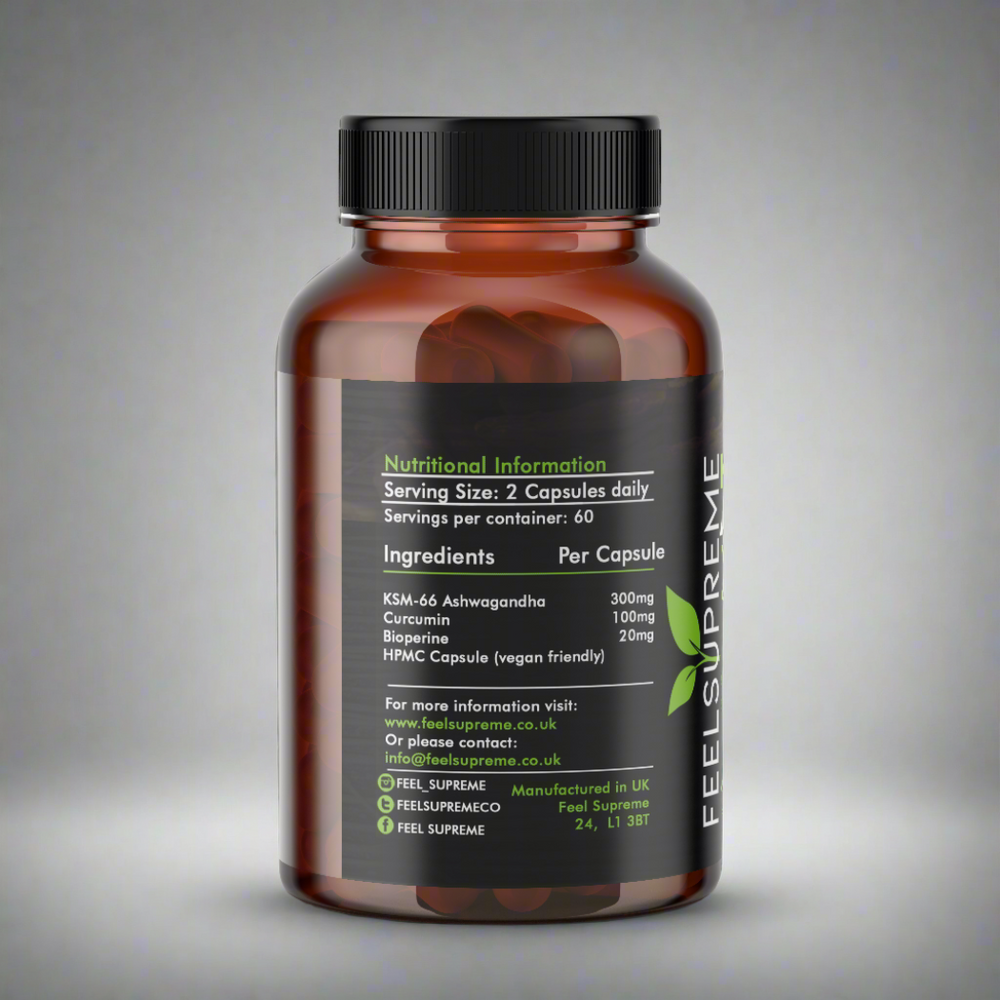
Most of the strongest clinical evidence uses standardised root extracts, commonly KSM-66 or similar full-spectrum extracts, at doses ranging from 240mg to 600mg daily. When choosing an ashwagandha supplement, look for:
- A standardised extract with a stated withanolide percentage
- Root extract rather than leaf-only formulations, as most clinical research uses root
- Consistent daily dosing over at least 8 weeks, since most trial benefits were observed at this timepoint
- Pairing with black pepper extract (piperine) or curcumin, which some formulations use to support absorption
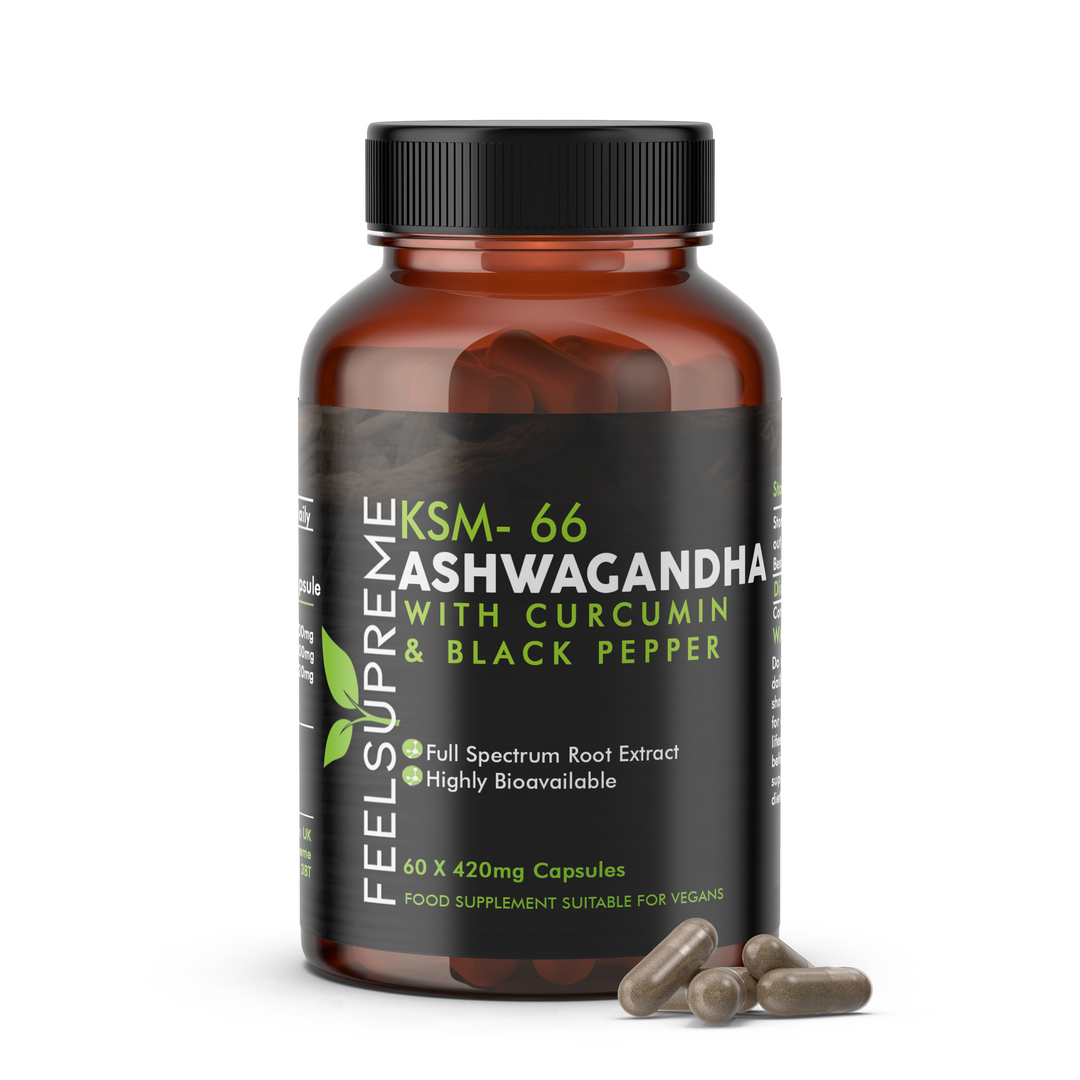
Feel Supreme's KSM-66 Ashwagandha with Curcumin and Black Pepper uses a clinically studied extract paired with black pepper to support absorption, and is part of the broader Ashwagandha collection at Feel Supreme. If sleep is your primary concern alongside stress, it is also worth browsing the Sleep range.
Safety and Who Should Be Cautious
Ashwagandha is generally well tolerated in clinical trials, with adverse effects typically mild and comparable to placebo. However, it should be avoided during pregnancy and breastfeeding, and those with autoimmune conditions, thyroid disorders or who are taking sedative medication, immunosuppressants or thyroid medication should speak to a GP before starting, since ashwagandha can influence thyroid hormone levels and may interact with these treatments. It is a food supplement, not a medicine, and is not intended to diagnose, treat, cure or prevent any disease.
Frequently Asked Questions
How long does ashwagandha take to work for stress and anxiety?
Most clinical trials measuring ashwagandha for stress and anxiety show meaningful improvements after 6 to 8 weeks of consistent daily use, with some studies extending to 60 days. It is not designed to work as an immediate calming aid in the way a fast-acting remedy would, so consistency over several weeks tends to produce better results than occasional use.
What is the best time of day to take ashwagandha?
Ashwagandha can be taken at any time of day, though many people prefer taking it in the evening if sleep support is a priority, or in the morning if the main goal is steadier stress resilience throughout the day. Splitting the daily dose into morning and evening is also common, particularly for higher doses.
Can ashwagandha help with sleep as well as stress?
Yes, several clinical trials studying ashwagandha for stress and anxiety have also measured sleep outcomes, finding improvements in sleep quality and sleep onset time alongside reductions in perceived stress. This dual effect is one of the reasons ashwagandha is often recommended for people whose stress and sleep issues are closely linked.
Is ashwagandha safe to take long-term?
Most clinical trials run for 8 to 12 weeks, so long-term safety data beyond several months is more limited. Many people do take ashwagandha on an ongoing basis, but it is sensible to take periodic breaks and to check in with a GP if using it continuously for more than a few months, particularly if you have any underlying health conditions.
The Bottom Line
Few natural supplements have as much clinical backing as ashwagandha when it comes to stress management. If you are considering ashwagandha for stress and anxiety, choosing a standardised, clinically studied extract and committing to consistent daily use for at least 8 weeks gives you the best chance of experiencing the effects that have shown up so consistently in research. Explore the wider Brain Range at Feel Supreme for complementary support.
Support your daily calm with clinically studied ashwagandha
Shop KSM-66 Ashwagandha1 Source: Ashwagandha: Is it helpful for stress, anxiety, or sleep? NIH Office of Dietary Supplements